
Not on this site
No fast results
No rapid timelines, no transformation framing, no before-and-after presentation of any kind.

Strong Mind Your Body is a small editorial resource about food-first nutrition for men, with a focus on energy, vitality and reproductive health in the UK. We are not a supplement brand and we do not sell anything.
The site exists because most men looking into this topic meet it through advertising rather than through nutrition guidance.
Our job is to close that gap. We explain what UK sources actually say about zinc-rich foods, selenium, healthy fats and Mediterranean-style eating, and we translate it into meals.
The audience is British men, and anyone shopping and cooking for them. Everything is written in plain English, without medical jargon and without the exaggerated promises that dominate the category. When a nutrient keeps turning up in independent guidance, it earns a page and gets explained in terms of ordinary shopping and ordinary cooking. When something appears only in a marketing funnel, it stays out.
That means you will not find a protocol here, or a ranked list of products to buy. You will find food, portion context, and an honest note about how strong the evidence is for each claim.
We start from what appears repeatedly in UK nutrition and fertility resources. Repetition across independent sources is our filter, and it is the only one we use.
Named across many sources
It earns a full page, written against the questions readers actually send us.
Named in one place only
It waits. We do not build a page around a single article, a brand page or a press release.
Pushed mainly as a product
It stays out. That is why you will not find obscure powders or imported miracle ingredients here.
Evidence is thin or mixed
We still cover it if readers ask, and we say plainly where the picture is unclear.
That is how pumpkin seeds, sesame seeds, Brazil nuts, oily fish, poultry and wholegrains ended up on the site: they keep being named by bodies that have no product to sell. It is also why the list is short. A resource that covers everything covers nothing well.
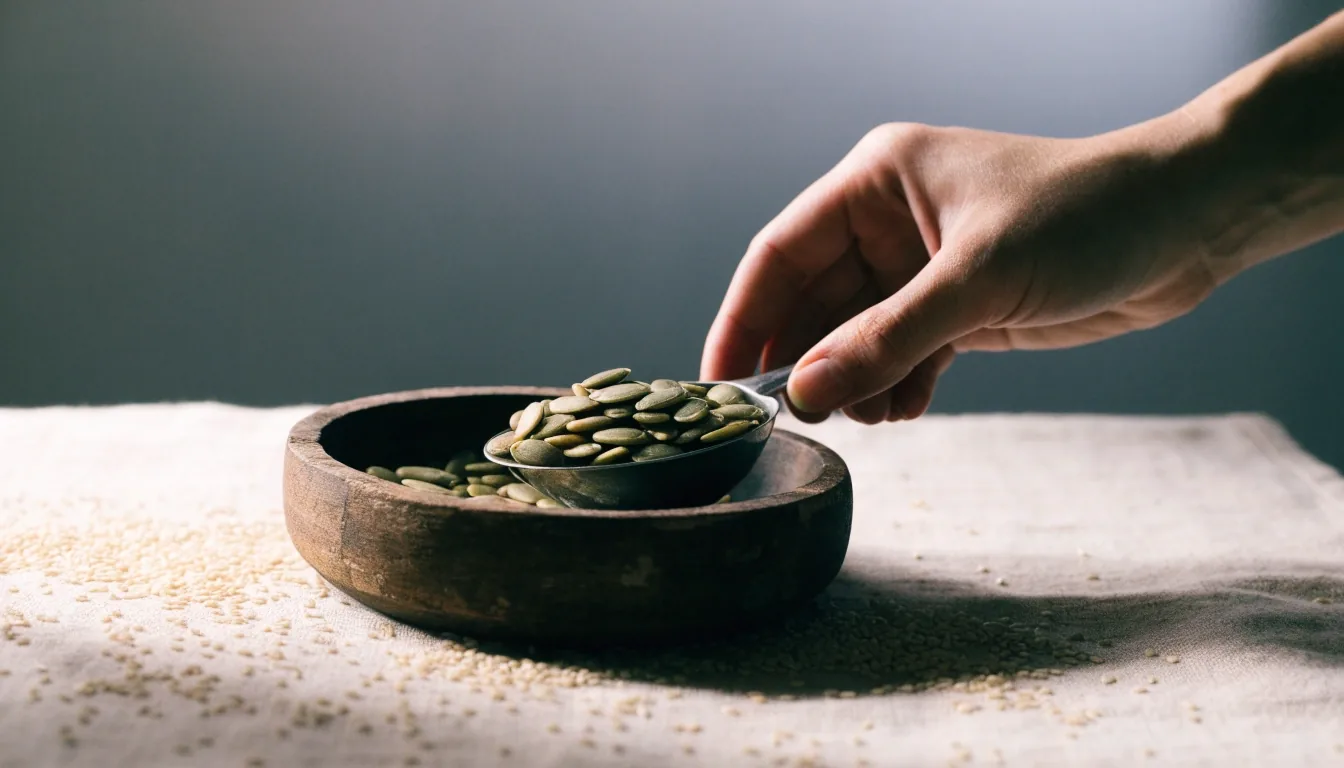
We take a food-first position, and we state it plainly.
Selenium, for example, is commonly presented in UK guidance as a nutrient to obtain from food rather than supplements, and the relevant foods, Brazil nuts, fish, meat, poultry and eggs, are all normal shopping. The same is true of zinc-rich foods such as pumpkin seeds and sesame seeds.
That does not mean supplements are never appropriate. It means this site describes food, because food is what we can write about accurately and what most readers can act on. A bag of pumpkin seeds costs less than most capsules and fits into a working week without a new routine.
Food first
What you can buy in a normal supermarket and cook in a normal kitchen.
Ordinary amounts
Handfuls, servings and meals. Not protocols, not doses, not powders.
Ordinary timescales
Weeks and months of eating, not a seven-day transformation story.
We do not claim that any food cures, treats or prevents anything. We do not publish testimonials or reviews, because we do not have verified ones and we will not invent them.
Not on this site
No rapid timelines, no transformation framing, no before-and-after presentation of any kind.
Not on this site
No testimonials, no ratings, no certifications, no partnerships we have not actually got.
Where the evidence is thin
We say so rather than quietly implying more. Green tea stays on the site as a drink, not as a fertility fix.
The position we do hold
In ordinary amounts, over ordinary timescales. We also do not pretend diet is irrelevant. The middle position is the accurate one.
Readers who want dramatic claims will find them elsewhere, and that is fine.
Plainly, before you read further
This is nutrition writing, not medical advice.
Food described here is meant to support normal energy and reproductive health in the context of an ordinary diet. It is not a treatment for any condition, and it is not a substitute for care from a qualified professional. If you have a specific health concern, a diagnosed condition, or you are taking prescribed medication, speak to your GP or another qualified professional before changing how you eat.
Each page is drafted against a specific question a reader might have, then checked for two things: whether every factual statement matches what UK nutrition sources say, and whether any sentence overstates what food can do.
Wording is kept deliberately careful. "Zinc-rich foods" rather than "boosts testosterone". "Needed for normal sperm production" rather than "improves fertility". If a sentence sounds like a supplement advert, it gets rewritten or removed.
Step one
Start from a real reader question
Not from a keyword list and not from a product. If we cannot name the question in one sentence, the page is not ready to write.
Step two
Check every factual statement against UK sources
Nutrient roles, food sources and any note about who is at risk of deficiency are read back against established UK nutrition and fertility resources before publication.
Step three
Read it back looking for overstatement
Any line that promises an outcome gets rewritten into a description of the food, or cut. This is the pass that removes most of the language the category normally uses.
Step four
Revise rather than quietly patch
When a page changes, it is rewritten as a whole and dated. Corrections readers send us are logged, and they often become the next page.
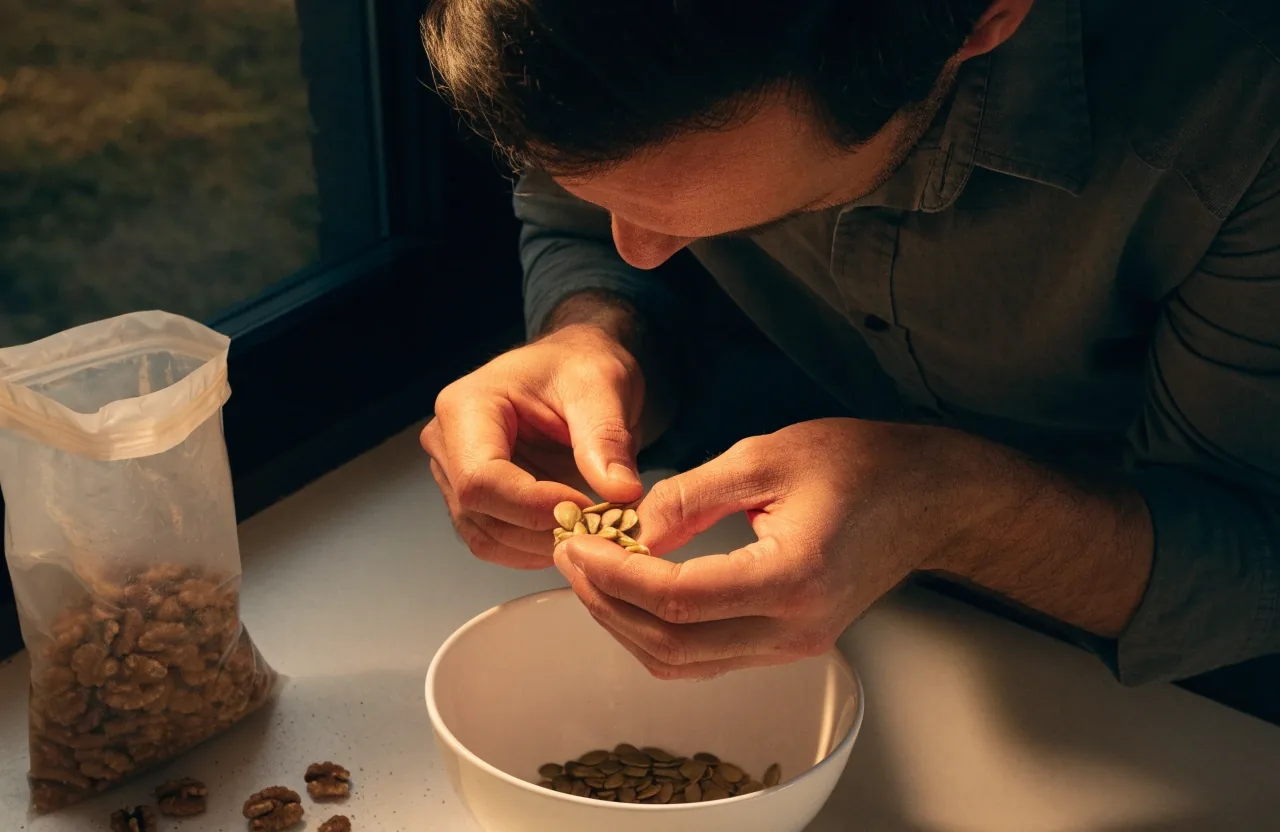
The typical reader is a British man in his thirties or forties who has started paying attention to energy, fertility or general health and wants to know what to eat. He is not looking for a protocol. He is looking for something he can fold into a normal week that involves work, a supermarket and probably a takeaway.
Partners, parents and anyone cooking for a household where fertility is on the agenda will find the same material useful, which is why the meal pages are written for a shared kitchen rather than a single portion on a plate.
Questions about the food and nutrient topics covered here are welcome, and they often become the next page.
Contact the editorial teamIf something on this site is wrong, we want to know. If a source has changed its position, or a page overstates a claim, write to us and we will look at it. Corrections are logged and pages are revised rather than quietly patched.
You can reach the editorial team through the contact page, where we also take questions about the food and nutrient topics covered here.
Reaching us
We are an editorial resource, not a clinic. For anything concerning your own health, please speak to a qualified professional.
The pages below are the food guidance this editorial approach produces. Each one names the foods, explains what they contribute and keeps the claims to what UK sources actually support.