
Mediterranean-Style Eating for Men
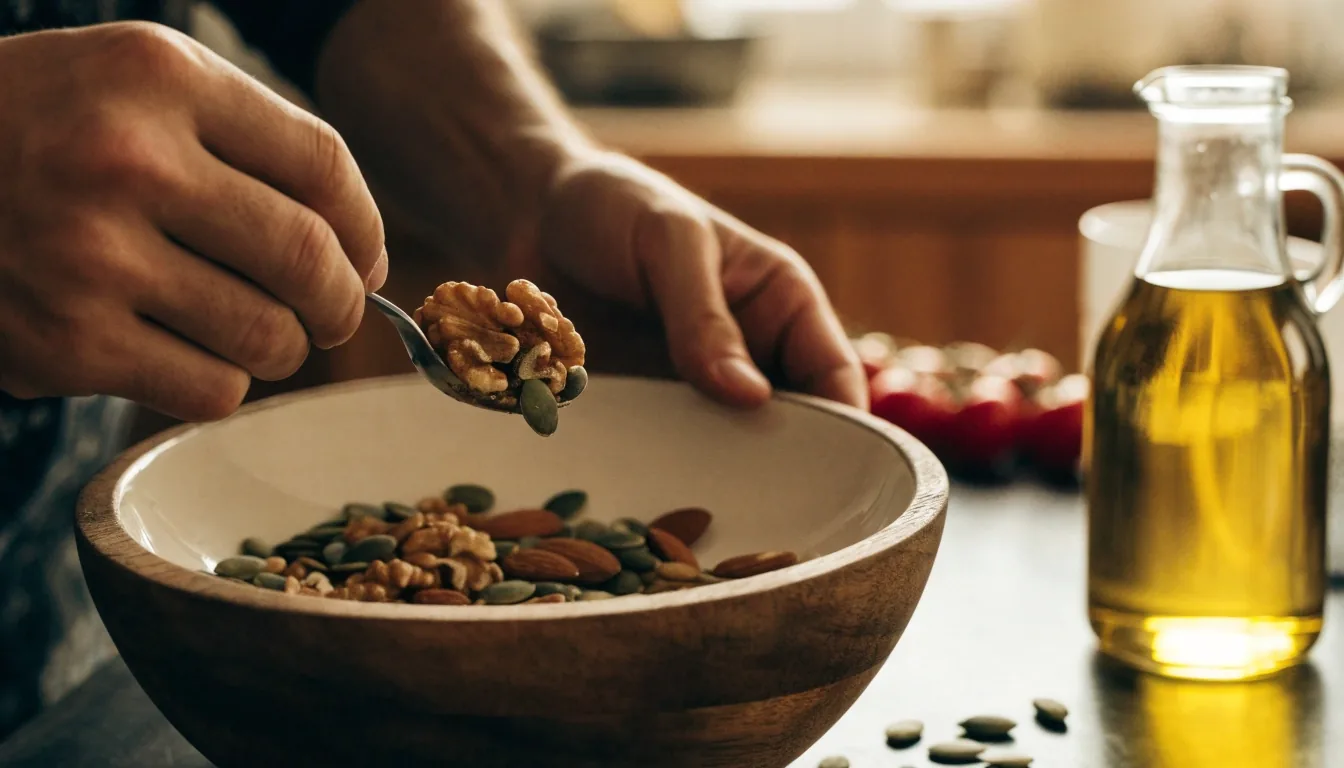
Ask what diet gets recommended for male fertility and the same answer keeps coming back: a Mediterranean-style pattern of plants, nuts, seeds, healthy fats and fish. This page shows what that looks like in a British kitchen, and why UK resources keep pointing to it.
Those four rows are the whole shape of the pattern. Nothing here is exotic, nothing is banned, and nothing needs a specialist shop. The rest of this page takes each one apart and shows how it lands on a normal UK weekly shop.
The pattern, not the postcode
Mediterranean-style eating is recommended repeatedly in UK male fertility resources, and it is described as a dietary pattern rather than a set of recipes. That distinction matters more than it first looks.
You are not trying to eat Italian food. You are trying to eat in a shape that includes plenty of plants, regular fish, olive-oil-style fats and wholegrains instead of refined ones. A lentil soup with wholemeal bread belongs to the pattern just as much as a Greek salad does. Once you separate the pattern from the cuisine, the weekly shop stops being a research project.
That is also why the same pattern shows up across guidance that otherwise disagrees on details. Different organisations describe the plate differently, but they converge on plant-forward eating, healthy fats and fish. A pattern survives translation into British supermarkets, corner shops and frozen aisles. A specific cuisine does not.
So the useful question is not what to cook on Sunday. It is what your default week looks like: what is in the cupboard, what you reach for at lunch, and what turns up on the plate most evenings without any decision-making.
What actually sits on the plate
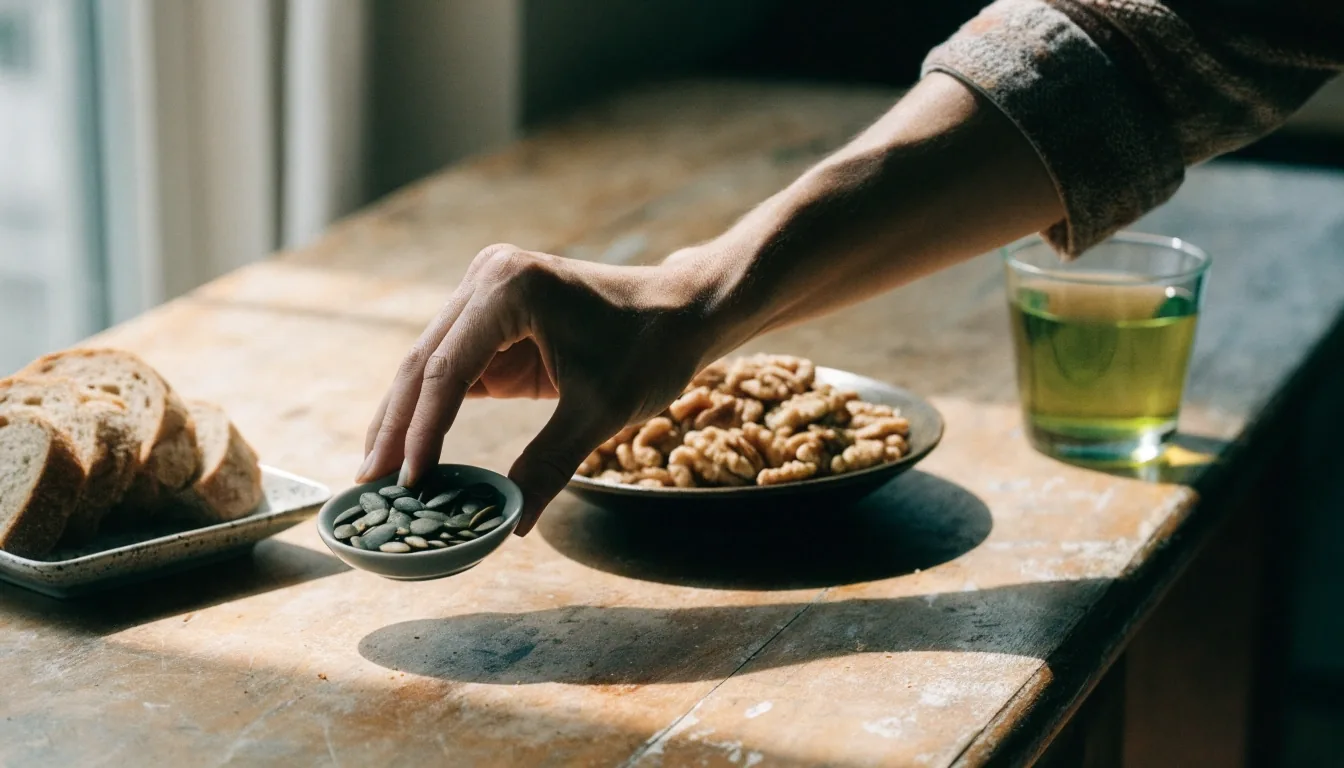
Fruits and vegetables form the base, in whatever form is practical: fresh, frozen or tinned. Wholegrains come next, so brown rice, oats, wholemeal pasta and wholegrain bread rather than their white equivalents. Then nuts and seeds, healthy fats such as olive oil, and fish, with oily fish prominent. Meat and poultry appear in smaller amounts, and processed food appears less often.
Nothing is banned, which is exactly why the pattern gets recommended instead of a restrictive diet. A diet built on prohibition needs willpower every day. A pattern built on defaults mostly needs a cupboard that is stocked the right way.
Why it fits male fertility guidance so well
The pattern is used as the main food-pattern frame in UK guidance rather than a single-ingredient focus, and there is a practical reason for that.
Instead of chasing one nutrient at a time, you eat in a way that happens to include several at once. Review literature on male infertility experience has supported this pattern-based approach, which is why it has become the default recommendation rather than a niche one. If you want the mineral detail on its own, the zinc and selenium guide takes that thread further.
A British week in practice
One week, written out the way it actually gets eaten. No ingredient here needs a specialist shop, and the whole list fits a normal supermarket basket.
Porridge with pumpkin seeds and a spoon of tahini. Oats and seeds cover wholegrains and zinc in one bowl, and it takes four minutes.
Lentil and tomato soup with wholemeal bread, or a sardine sandwich if that is your thing. Both are tinned-food meals that land squarely inside the pattern.
Mackerel with new potatoes and frozen peas on Monday. A chicken thigh traybake with peppers on Wednesday. A chickpea and spinach curry on Friday, with brown rice if you have it in.
Walnuts, an apple, green tea instead of a fizzy drink. This is where most of the nut and seed volume of the week quietly accumulates.
That week is recognisably British, recognisably cheap, and it follows the pattern closely. Swap the mackerel for a different oily fish, swap the chickpeas for butter beans, and you have next week without learning anything new. If you want more of these, the everyday meal ideas page works through the same cupboard in more detail.
Nuts and seeds inside the pattern
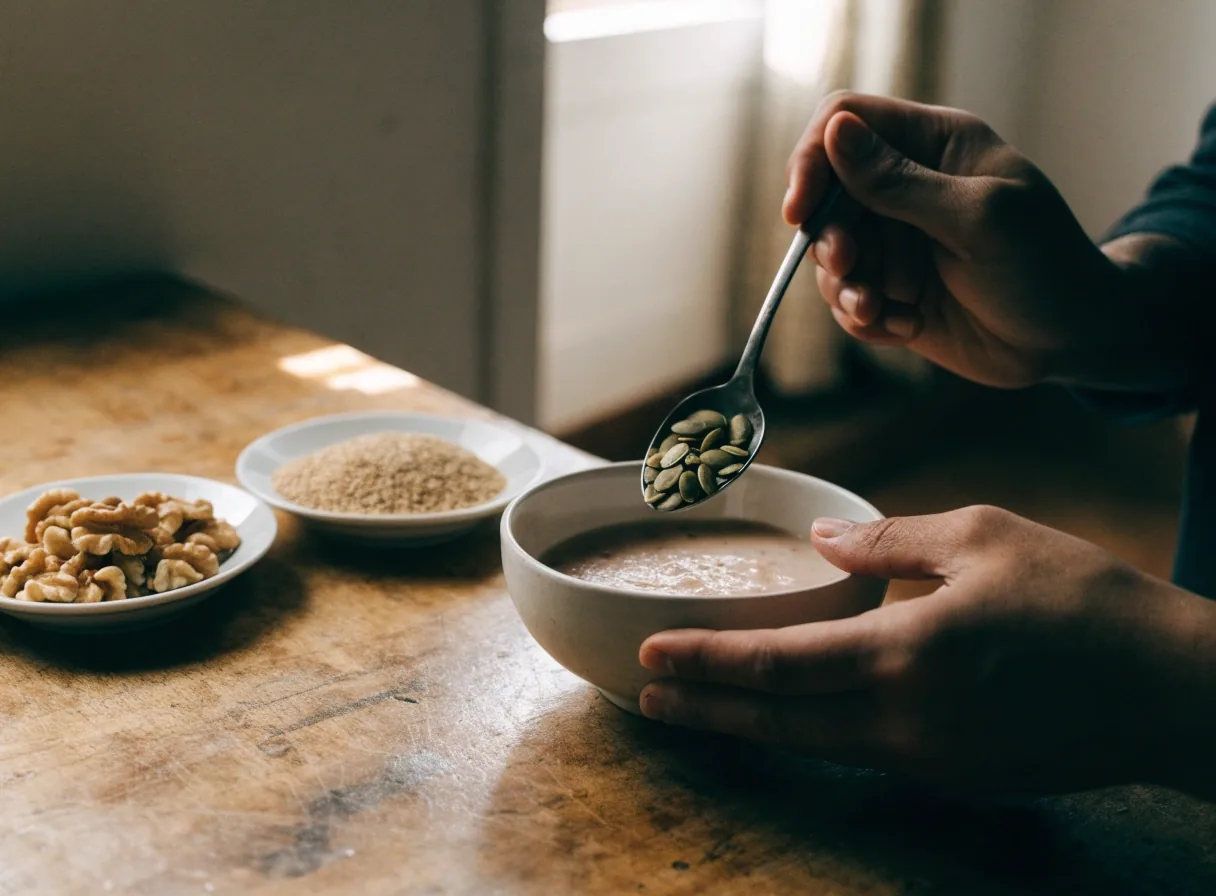
This is where the Mediterranean pattern connects most directly to the minerals discussed elsewhere on this site, and it is also the cheapest part of it to keep up.
-
Pumpkin seeds bring zinc and work as a topping for salads, porridge and yoghurt-style bowls.
-
Sesame seeds and tahini add zinc as well, and both are mentioned in BDA fertility guidance. A spoon of tahini in porridge is the least effort version.
-
Walnuts and almonds fill out the healthy-fats side. A handful with a cup of green tea covers the mid-afternoon gap that otherwise becomes biscuits.
-
Sunflower seeds appear in NHS-style plant-based eating advice as a standard seed option, which makes them a safe default when you are unsure.
Keeping two or three types in the cupboard is the whole technique. There is no schedule, no measuring, and no supplement to remember. The vitality foods list groups them by what they contribute if you want to stock up deliberately.

Fish, and how often
Oily fish is named in UK fertility guidance as part of a healthy pattern for men, and it appears throughout Mediterranean-style recommendations. General healthy-eating advice in the UK usually references two portions of fish a week, one of them oily.
Tinned sardines, mackerel and salmon make that affordable and fast, and they keep for months in a cupboard. If you genuinely dislike fish, the pattern still works without it, but you lose the most convenient omega-3 source, so it becomes worth looking harder at other healthy fats instead. There is no rule that requires you to eat something you hate.
Healthy fats without the fuss

Healthy fats in this context means olive oil, nuts, seeds and the fats that come with fish, rather than a supplement.
Drizzle olive oil on vegetables, use it for roasting, keep nuts for snacking. The point is not to add fa to a diet. It is to replace some of the fats that arrive with processed food, so the swap is a substitution rather than an addition.
That swap, repeated most days, is where most of the pattern's practical value sits. It is also the change most people find easiest to keep, because olive oil and nuts taste good and the effort involved is opening a cupboard.
One boundary worth knowing: the pattern does not ask you to pour oil over everything. If you are already eating a lot of fa, the useful move is still the replacement, not the total. Swap the crisps for a handful of walnuts and you have done the whole thing.
Who this pattern suits
It suits anyone who wants a structure rather than a list of banned foods, which is most people who have tried restrictive diets before. It suits households where one person is not dieting, because the meals are normal meals. It suits people who cook occasionally rather than daily, since tinned fish, frozen vegetables and pre-cooked wholegrains all fit.
Where it suits less well is anyone who wants a precise protocol with exact quantities, because the pattern does not work that way. It is a direction of travel, not a prescription, and it will not tell you what to eat on any single Tuesday.
Questions people ask first
Short answers to the things that come up before anyone starts changing their shopping list.
Do I have to give up meat to follow this?
No. Meat and poultry appear in smaller amounts, and processed meat appears less often, but nothing is banned. The pattern is about proportions across a week rather than about excluding categories of food.
Is frozen or tinned food still part of the pattern?
Yes, and it is often the practical way to keep it up. Frozen vegetables, tinned tomatoes, tinned beans and tinned oily fish all fit the pattern. The distinction that matters is plants and whole foods versus heavily processed items, not fresh versus frozen.
How long before I would notice anything?
There is no useful timeline to promise, and anyone offering one is guessing. What the pattern offers is a way of eating that guidance keeps pointing to for men's energy and reproductive health. Treat it as a long-term habit rather than a short experiment, and talk to a qualified professional about your own situation.
Does this replace supplements?
It gives you a food-first base. Whether you also take a supplement is a question for a qualified professional who knows your history, not something a food pattern settles on its own.
Where to go next
Three routes if you want to keep going: the meals themselves, the minerals behind them, or the wider food list this site is built around.
This page is general educational information about food and dietary patterns. It is not medical advice and it does not diagnose, treat, cure or prevent any condition. If you have health concerns about fertility, energy or anything else discussed here, speak to a qualified professional.